What Makes Fotona Laser Treatments Different From Other Lasers?
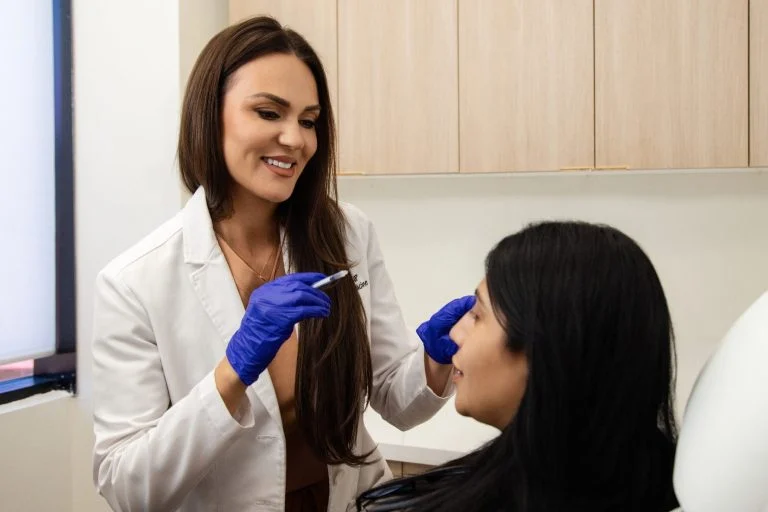
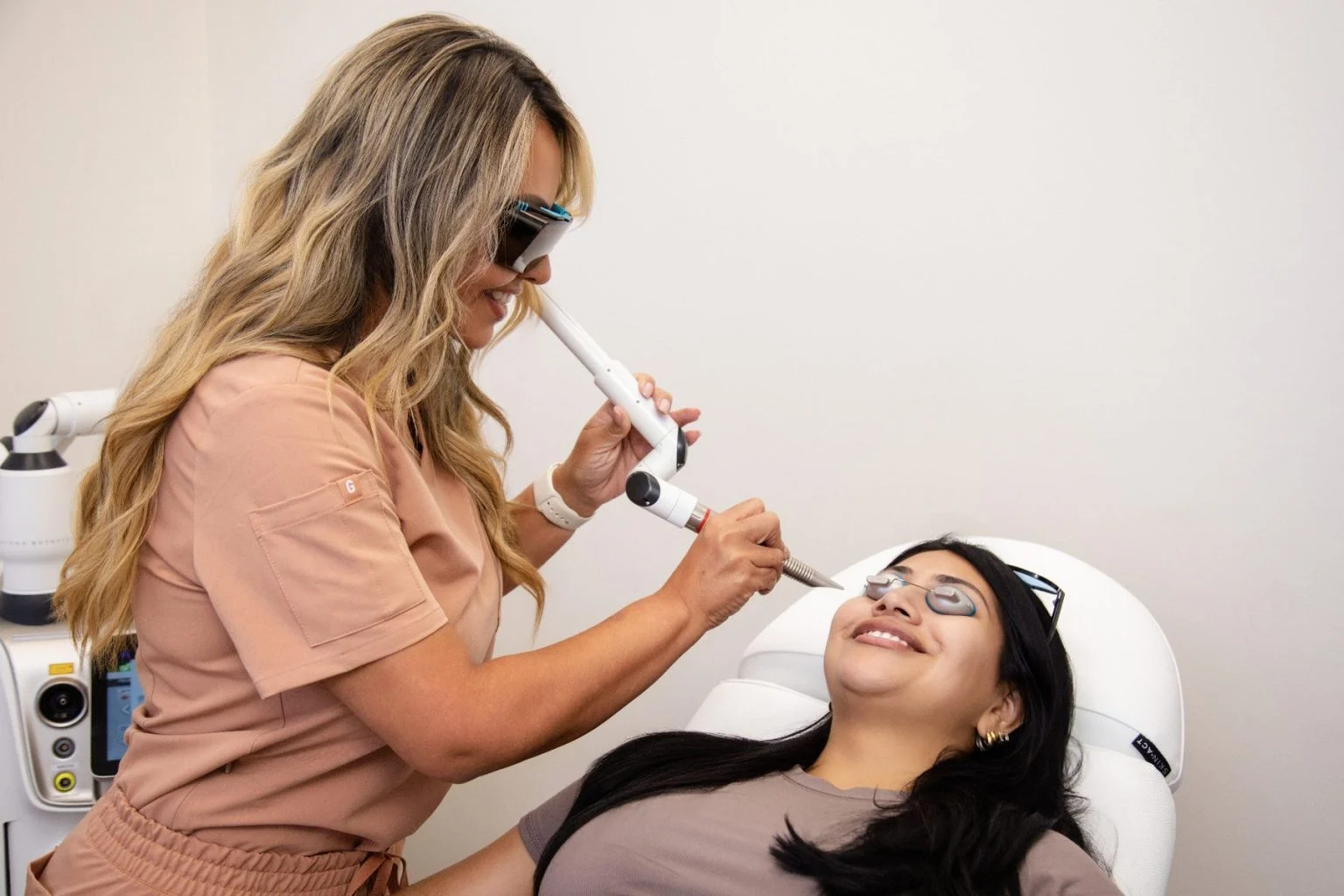
Walk into any aesthetic clinic and you will hear the word "laser" used as if it describes one thing. It does not. In practice, laser platforms differ enormously in wavelength, pulse duration, tissue interaction, safety profile, treatment depth, and versatility. That is why two treatments described casually as "laser resurfacing" can feel, heal, and perform very differently.
Fotona has earned a distinct reputation because it was built around a different philosophy from many single-purpose systems. Instead of designing one device to do one headline procedure, Fotona developed platforms that combine multiple wavelengths and treatment modes to handle a wide range of concerns, from texture and laxity to pigment, vascular irregularities, acne scarring, snoring, intimate wellness, and hair reduction. That breadth is not just a marketing point. It changes how experienced clinicians approach treatment planning.
The short version is that Fotona Laser Treatments often stand out for precision, adaptability, and the ability to blend superficial and deep tissue effects in the same session. The longer answer is more interesting, because the difference is not only the machine. It is the way the machine lets a skilled provider work.
The real question is not "which laser is best?"
A better question is: best for what, on whom, and with what tolerance for downtime?
Many patients come in asking whether Fotona is "better than CO2," "better than Fraxel," or "better than IPL." Those comparisons can be useful, but they are also incomplete. CO2 lasers excel in certain resurfacing scenarios. IPL is not even a laser, yet it can be excellent for diffuse redness and sun damage in the right person. Fractional non-ablative devices can improve texture with less recovery, though often over multiple sessions. The practical value of Fotona lies in how many clinical goals it can address without forcing the provider into a one-note treatment plan.
A patient with early jowling, enlarged pores, mild acne scarring, redness around the nose, and a busy work schedule is a good example. With some systems, you would need separate devices, separate treatment days, or a compromise that solves one issue while barely touching the others. Fotona platforms, especially those pairing Er:YAG and Nd:YAG wavelengths, give clinicians a toolkit rather than a https://gunnercbdo823.tearosediner.net/fotona-laser-treatments-for-subtle-yet-noticeable-results single hammer.
That is the difference many people feel when they sit down for consultation. The conversation becomes less about fitting the face to the machine, and more about matching the machine settings to the biology of the face.
Two wavelengths, very different jobs
One of the defining features of many Fotona systems is the pairing of Er:YAG at 2940 nm and Nd:YAG at 1064 nm. These are not minor variations on a theme. They interact with tissue very differently.
Er:YAG is strongly absorbed by water, which makes it highly effective for precise ablation and superficial resurfacing. When a provider wants to remove damaged surface tissue with tight control over thermal spread, Er:YAG is useful because it can be aggressive when needed but still remarkably exact. In experienced hands, this can translate into smoother texture, softer fine lines, and meaningful scar revision with less residual heat than some older resurfacing systems.
Nd:YAG at 1064 nm penetrates more deeply and is less superficially absorbed. That makes it valuable for dermal heating, vascular work, hair reduction, and collagen remodeling in deeper layers. It can also be safer across a broader range of skin types than some shorter wavelengths that target pigment more aggressively at the epidermal level.
This combination matters because skin concerns rarely live at one depth. A person may need surface refinement and deeper collagen stimulation at the same time. Fotona made its name, in part, by allowing providers to layer those effects intentionally rather than treating each depth in isolation.
Why mode flexibility matters more than brochure claims
Many laser brochures promise collagen stimulation, tightening, glow, rejuvenation, and minimal downtime. Those words are easy to print and hard to compare. What actually separates systems is how finely a provider can control fluence, pulse duration, spot size, repetition rate, fractional pattern, and treatment sequence.
Fotona platforms are known for offering a broad set of treatment modes, including full-field, fractional, subablative, non-ablative, and thermal approaches. That versatility lets providers tune the treatment to the patient sitting in front of them rather than defaulting to a fixed protocol.
In practice, this is where Fotona often feels different from more rigid devices. A 32-year-old patient with post-acne textural change and olive skin may need a cautious, staged plan that builds improvement while respecting pigment risk. A 58-year-old patient with etched perioral lines and more laxity may accept a few extra days of downtime for a stronger endpoint. The same brand can accommodate both, not because it is magical, but because the operator has room to modulate intensity and tissue effect.
That flexibility also explains why outcomes with Fotona can vary dramatically from clinic to clinic. The platform is capable. The provider still matters, sometimes more than people realize.
The "inside-out" concept is not a gimmick
One of the better-known Fotona approaches is the idea of treating tissue from both the outer skin surface and the mucosal side, especially in facial tightening protocols such as intraoral treatments. That concept sounds unusual at first, but anatomically it makes sense.
The lower face and perioral area are not just a skin problem. Volume shifts, ligament laxity, muscular pull, and changes in the support structures all contribute to what patients call sagging or "looking tired." Surface-only treatments have limits. Heating deeper tissues from inside the mouth can complement surface work by stimulating collagen in areas not easily reached with external treatment alone.
Patients often notice this most around the nasolabial fold region, marionette area, and lower cheek support. It does not replace a surgical lift when someone truly needs one. That distinction matters. But for the right patient, especially one with early to moderate laxity who wants visible improvement without surgery, this layered strategy can produce a more balanced result than a purely superficial treatment.
I have seen patients dismiss the idea initially because it sounds too clever, then come back surprised that their face looked firmer without the over-tight, shiny surface that sometimes follows overtreatment with more aggressive resurfacing. That is one of Fotona’s quieter strengths. When done well, the change can look structural rather than polished for the sake of polish.
Downtime is where expectations need honesty
A common misunderstanding is that Fotona always means little or no downtime. Sometimes that is true. Sometimes it is not.
Fotona can be used for lunch-hour style treatments with mild erythema and quick recovery. It can also be used for aggressive resurfacing that leaves a patient red, swollen, and flaky for days or longer. The range is broad because the platform is broad. That is an advantage clinically, but it can confuse patients who read one testimonial and assume all Fotona Laser Treatments are gentle.
This is why consultation quality matters. Providers should explain not only the device name, but the exact protocol planned. A patient hearing "Fotona" could be signing up for a light collagen-stimulating session before a wedding or a serious resurfacing series for acne scarring. Those are different experiences with different aftercare and different risk profiles.
Compared with some traditional CO2 resurfacing, Er:YAG-based treatments may offer faster healing in certain cases because of more limited thermal injury. Compared with very mild non-ablative treatments, stronger Fotona sessions may bring more visible peeling or redness because more is being asked of the skin. There is no universal downtime story. Honest clinics say that upfront.
Skin type considerations often favor Nd:YAG versatility
When comparing laser platforms, skin type is not a side note. It is central. Devices that interact strongly with epidermal pigment can carry a higher risk of post-inflammatory hyperpigmentation in darker skin tones if used carelessly. That does not mean those devices should never be used. It means patient selection and parameter choice are everything.
Fotona’s 1064 nm Nd:YAG wavelength is often appreciated because it can be used more safely across a wider range of skin types for many indications. This is especially relevant for deeper heating, vascular issues, and hair reduction. The deeper penetration and lower melanin absorption, compared with some shorter wavelengths, can provide a wider treatment window.
That said, "safer" does not mean foolproof. Darker skin can still develop pigmentation changes, prolonged inflammation, or inconsistent results if the settings are too aggressive, cooling is inadequate, or the treatment plan ignores recent sun exposure, acne activity, or barrier compromise. The best providers using Fotona tend to be conservative early, then escalate if the skin proves it can handle more.
This is another reason the platform stands apart. It supports nuance. Nuance is not glamorous, but it is where good outcomes live.
Fotona is often more versatile than people expect
A lot of lasers are bought for one star procedure. Fotona systems tend to stay busy because they can cover multiple service lines without feeling like a compromise device. That matters for clinics, but it also matters for patients who would rather not bounce between specialists for concerns that overlap.
Here are some areas where Fotona commonly gets used:
- skin tightening and collagen remodeling
- acne scar and texture improvement
- vascular and pigmented lesion treatment, depending on the platform and settings
- hair reduction
- gynecologic and ENT applications in select medical settings
That range does not mean Fotona is automatically first choice for every item on the list. It means a good clinic can create continuity of care. A patient might start with vascular treatment, later transition into scar revision, and eventually maintain skin quality with lower-downtime sessions, all without switching systems entirely.
The treatment feel is different too
Patients often ask what Fotona feels like compared with other lasers. The answer varies by mode, but certain patterns show up repeatedly.
Nd:YAG tightening sessions often feel like bursts of heat that build gradually. Many patients describe them as tolerable, especially with good movement technique and appropriate cooling or topical prep. Er:YAG resurfacing can feel sharper and more intense, particularly in thinner-skinned regions. Fractional passes usually feel different from full-field passes, and intraoral work has its own odd but manageable sensation.
What matters more than the pain score is how treatment energy is delivered. Some lasers create a broad, blunt sense of thermal stress. Others feel more crisp or punctate. Fotona’s treatment experience often reflects its precision. That can be reassuring for patients who are wary of devices that seem to rely on brute-force heat. It can also surprise people who expected a spa-like facial and instead receive a procedure that is undeniably medical.
From a provider’s standpoint, this tactile difference matters because patient feedback during treatment can help guide safe escalation. If the skin responds faster than expected, or heat stacking becomes noticeable in a sensitive area, the settings can be adjusted intelligently.
Not all resurfacing is equal
When people compare Fotona with CO2 lasers, resurfacing usually sits at the center of the conversation. This is where details matter.
CO2 remains a formidable resurfacing option, especially for deeper wrinkles, significant textural change, and certain scar patterns. It creates more thermal coagulation, which can be useful, but also often brings more downtime and a higher burden of aftercare. Er:YAG, by contrast, is known for more precise ablation with less surrounding thermal damage. That can mean faster healing and a different risk-reward profile.
For a patient with severe smoker’s lines or advanced sun damage who is willing to disappear socially for a while, CO2 may still be the stronger recommendation in some practices. For a patient who wants meaningful resurfacing but is wary of prolonged recovery, Er:YAG-based Fotona treatments may land in a more acceptable middle ground.
The smart comparison is not which one is superior in the abstract. It is which one gives the desired endpoint with acceptable trade-offs.
The protocols are where Fotona really separates itself
Several Fotona treatment protocols have become recognizable names in aesthetic medicine, but what matters is the logic behind them. A common example is a multi-step facial rejuvenation session that combines deep heating, fractional improvement, superficial polishing, and tightening in one structured sequence.
That sequence matters because the order of tissue interaction changes the result. Deeper thermal stimulation can prime remodeling. Fractional treatment can target texture. Light surface work can refine reflectivity and feel. When these elements are stacked thoughtfully, the face often looks more comprehensively improved than it would after a single-mode treatment.
This is one place where inexperienced operators sometimes underdeliver. They may own a sophisticated platform but use one setting repeatedly because it is comfortable or easy to market. Fotona tends to reward curiosity and anatomical understanding. The best results usually come from providers who know when to layer, when to hold back, and when a patient needs a different technology altogether.
Good candidates, and people who should pause
Despite the wide range of applications, not every patient is a clear yes on day one. Strong treatment planning starts with a few practical questions.
- Is the concern mainly superficial, mainly deep, or both?
- What level of downtime is realistic for this patient?
- Is the patient prone to pigmentation, scarring, rosacea flares, or poor wound healing?
- Are expectations aligned with what a laser can actually do?
- Would another treatment, or a combination approach, outperform laser alone?
That last point is often overlooked. Lasers tighten and resurface, but they do not replace volume loss. They do not retrain facial expression patterns. They do not remove substantial skin excess. A patient with hollow temples, heavy descent, and static folds may get a "nice improvement" from Fotona and still feel underwhelmed if no one addressed filler, biostimulation, surgery, or neuromodulators in the broader plan.
The clinics that use Fotona best tend to be the clinics that do not oversell it.
Precision can make aftercare simpler, but not optional
One underappreciated advantage of a well-executed Fotona treatment is that tissue response can be more predictable than with older, less refined systems. Predictability helps with healing. It does not erase the need for careful aftercare.
After resurfacing sessions, bland moisturization, sun avoidance, gentle cleansing, and strict adherence to post-procedure instructions are non-negotiable. Heat exposure, exercise too soon, exfoliating acids, and active ingredients can prolong redness or trigger irritation. For deeper heating treatments that leave the skin intact, aftercare may be minimal, but not casual. The skin barrier is still temporarily stressed.
Patients sometimes assume that if downtime is short, aftercare does not matter. In reality, some of the longest-lasting pigmentation problems I have seen started with patients who felt "basically fine" and went straight back into sun, sweat, and aggressive skincare.
Results tend to build, not arrive all at once
Another way Fotona differs from some more dramatic devices is in the timeline of visible change. Certain treatments produce an early tightening effect related to immediate collagen contraction and tissue dehydration, then continue improving over weeks to months as remodeling develops. Resurfacing can show a quicker textural shift on the surface, while deeper firmness evolves more slowly.
This gradual arc can be a positive. Patients often prefer progressive, believable improvement over a sudden, conspicuous change that invites questions. It can also be frustrating for someone expecting a one-session transformation. That is especially true in scar treatment and laxity management, where cumulative treatments often outperform a single heroic session.
A realistic provider will usually frame Fotona as a process rather than a magic event. For mild to moderate concerns, that process can be very rewarding. For advanced changes, it may be part of a larger plan.
Why provider skill matters even more with a versatile platform
When a machine can do many things, operator judgment becomes more important, not less. A single-purpose device can sometimes protect mediocre decision-making by narrowing the range of choices. Fotona does the opposite. It opens options.
A skilled provider understands tissue endpoints, knows how to stack modes safely, respects skin type differences, and recognizes when not to chase more energy. They also know that treatment density, overlap, and pass count can be as important as the number printed on the screen.
This is why one patient can rave about Fotona while another says it did nothing. The discrepancy may have less to do with the platform than with the protocol, diagnosis, and honesty of the consultation. Was the right concern treated? Was the endpoint realistic? Was the treatment actually strong enough to matter?
Those questions are not unique to Fotona, but they become especially relevant with a system capable of both subtle maintenance and serious intervention.
The bottom line patients usually care about
Most patients do not care what wavelength was used unless they have had a bad experience before. They care whether the treatment was worth the time, cost, discomfort, and recovery. Fotona often distinguishes itself because it can be tailored more precisely than many people expect, and because it bridges a gap between gentle maintenance lasers and highly aggressive resurfacing devices.
That makes it valuable for clinics that treat a diverse patient population and for patients whose concerns do not fit neatly into one category. It is not automatically the best choice in every case. No laser is. But when people say Fotona feels different from other lasers, they are usually noticing one of three things: the dual-wavelength architecture, the flexibility of the treatment modes, or the way a thoughtful provider can combine surface and deep remodeling in one coherent plan.
If a patient is deciding whether Fotona Laser Treatments are right for them, the most useful question is not whether the brand is famous or whether a friend loved it. The useful question is whether that specific Fotona protocol, in that provider’s hands, matches the skin problem that actually needs solving. That is where the difference becomes real.
OMNIA Wellness Center
Address: 16430 Ventura Blvd Ste 207, Encino, CA 91436
Phone number: +18183868511
FAQ About Fotona Laser Treatments
What is a Fotona laser good for?
A Fotona Laser system is a versatile, dual-wavelength medical laser used primarily for non-surgical skin tightening, anti-aging rejuvenation, and dermatological treatments.
How much does the Fotona laser cost?
The cost of a Fotona laser depends heavily on whether you are looking to purchase a laser machine for a medical practice or are a patient seeking a laser treatment at a medspa.
Is a Fotona laser worth it?
A Fotona laser treatment is generally worth it if you want non-surgical skin tightening, improved texture, and collagen stimulation with very little downtime.